How to Design an Irrigation System for a Small Dublin Garden
Small gardens need smart watering too. Here's how to plan and install an efficient irrigation system in a compact Dublin outdoor space.
Assessing Your Space
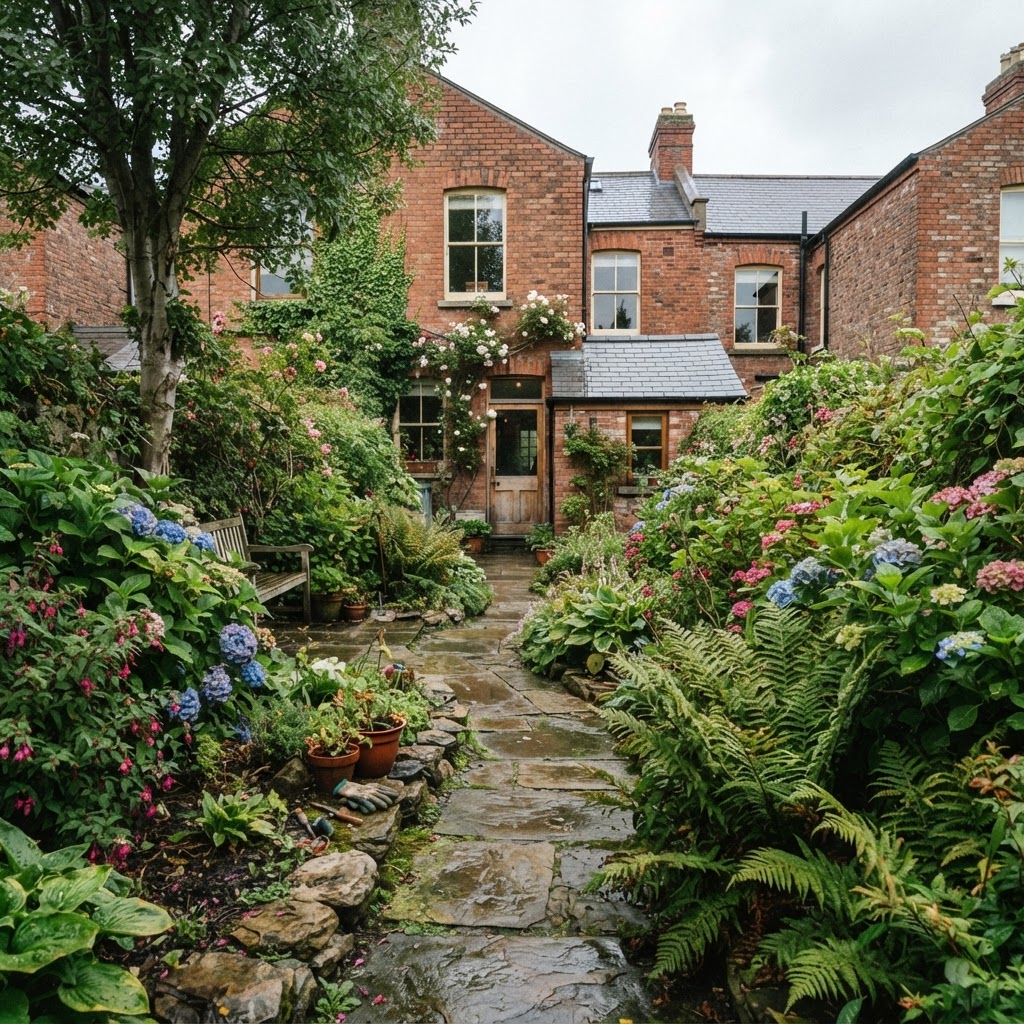
Small Dublin gardens — and there are many, from Victorian terraces in Rathmines to modern courtyards in the Docklands — have specific irrigation challenges. Space is tight, water pressure can be low, and every square metre needs to work hard. But a well-designed irrigation system is even more valuable in a small garden, where hand-watering takes proportionally more time and container plants dry out fast.
Start by mapping your garden. Note where the tap is, where your beds and containers are, and where the lawn (if you have one) sits. Measure the area you need to water and count the number of plants, pots, and hanging baskets. This determines how many zones and emitters you'll need.
Check your water pressure by timing how long it takes to fill a 10-litre bucket from your outdoor tap. If it takes more than 30 seconds, your pressure is on the low side and you'll need to design the system with fewer emitters per zone or use a pressure regulator.
Zoning for Different Plant Needs
Even in a small garden, different plants have different water needs. A container of thirsty ferns on a shady patio needs far more water than a sunny window box of geraniums. The key is to group plants with similar needs into zones, each controlled by its own valve on a multi-zone manifold.
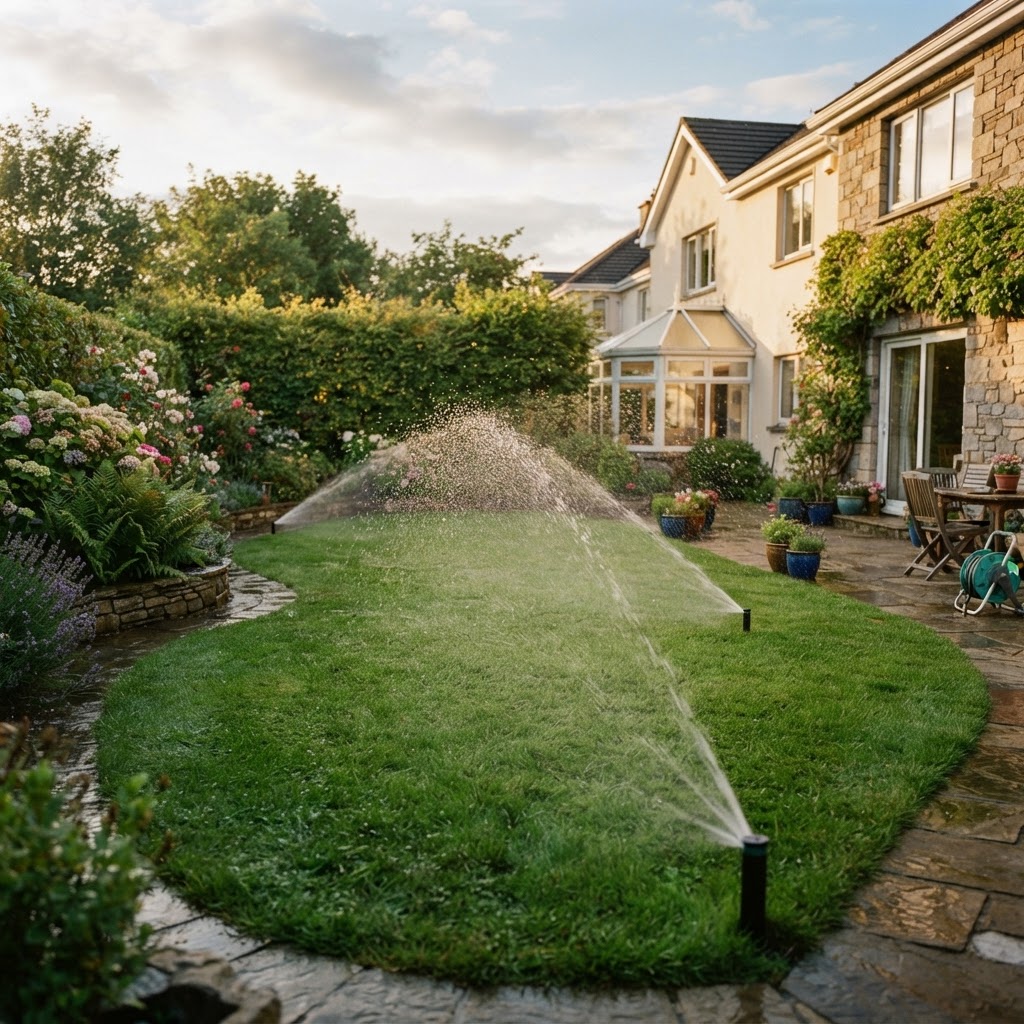
For a typical small Dublin garden, two or three zones is usually enough: one for containers and hanging baskets (drip with adjustable emitters), one for any ground-level beds (drip line or soaker hose), and optionally one for a small lawn (mini pop-up sprinklers). Each zone runs independently, so the containers get watered daily while the beds might only need it twice a week.
Don't forget vertical spaces. Climbing plants on walls and fences, and hanging baskets, are often the first to dry out in a small garden. Run micro-tubing up walls and along fence tops to feed these areas — it's unobtrusive and ensures your vertical green gets reliable water.
Choosing the Right Components
For small gardens, micro-irrigation is usually the best choice. This uses narrow 6mm or 13mm tubing — far less obtrusive than the 19mm or 25mm pipe used in larger systems — with individual adjustable drippers, micro-sprayers, and drip line. The tubing can be run along the top of pots, behind planters, or buried shallowly in beds, making it almost invisible.
A battery-operated tap timer is often sufficient for a small garden with just one or two zones. These screw directly onto your outdoor tap and don't need a power supply. For two or more zones, a multi-zone tap-mounted controller or a small wall-mounted controller is better, as it can run zones sequentially from a single tap.
If you have a small lawn, consider mini pop-up sprinklers rather than full-sized ones. They're shorter (75mm rather than 100mm), need less depth to install, and deliver a smaller coverage area that's better suited to compact lawns. For very small lawns (under 20 square metres), a single stationary sprinkler on a timer may be all you need.
Installation Tips for Small Spaces
In a small garden, aesthetics matter more than ever — every component is visible. Use brown or black drip tubing to blend with soil and mulch, and secure it neatly with stakes. Run tubing along the edges of beds and behind planters rather than across the middle. Where tubing crosses a path, either bury it in a shallow channel or use a protective ramp cover.
Keep the number of fittings to a minimum. Every joint is a potential leak point and adds visual clutter. Plan your tubing runs to be as direct as possible, and use 4mm micro-tubing for the final run to each pot or plant — it's barely visible.
Finally, consider a smart timer even for a small system. A Wi-Fi-connected tap timer costs from around €80 and pays for itself in water savings within a year. It adjusts watering based on Dublin's weather automatically, so your containers get watered when it's dry and skipped when it rains — no more coming home to find the timer watered during a downpour.